
Vacuum Grippers vs Mechanical Grippers: Which Solution Is Better for Automation?

In modern industrial automation, choosing the right gripping technology is essential for improving efficiency, reducing downtime, and ensuring stable production. Vacuum grippers and mechanical grippers are two of the most widely used solutions for robotic handling applications. Each technology has its own advantages depending on the workpiece material, shape, weight, and production requirements.
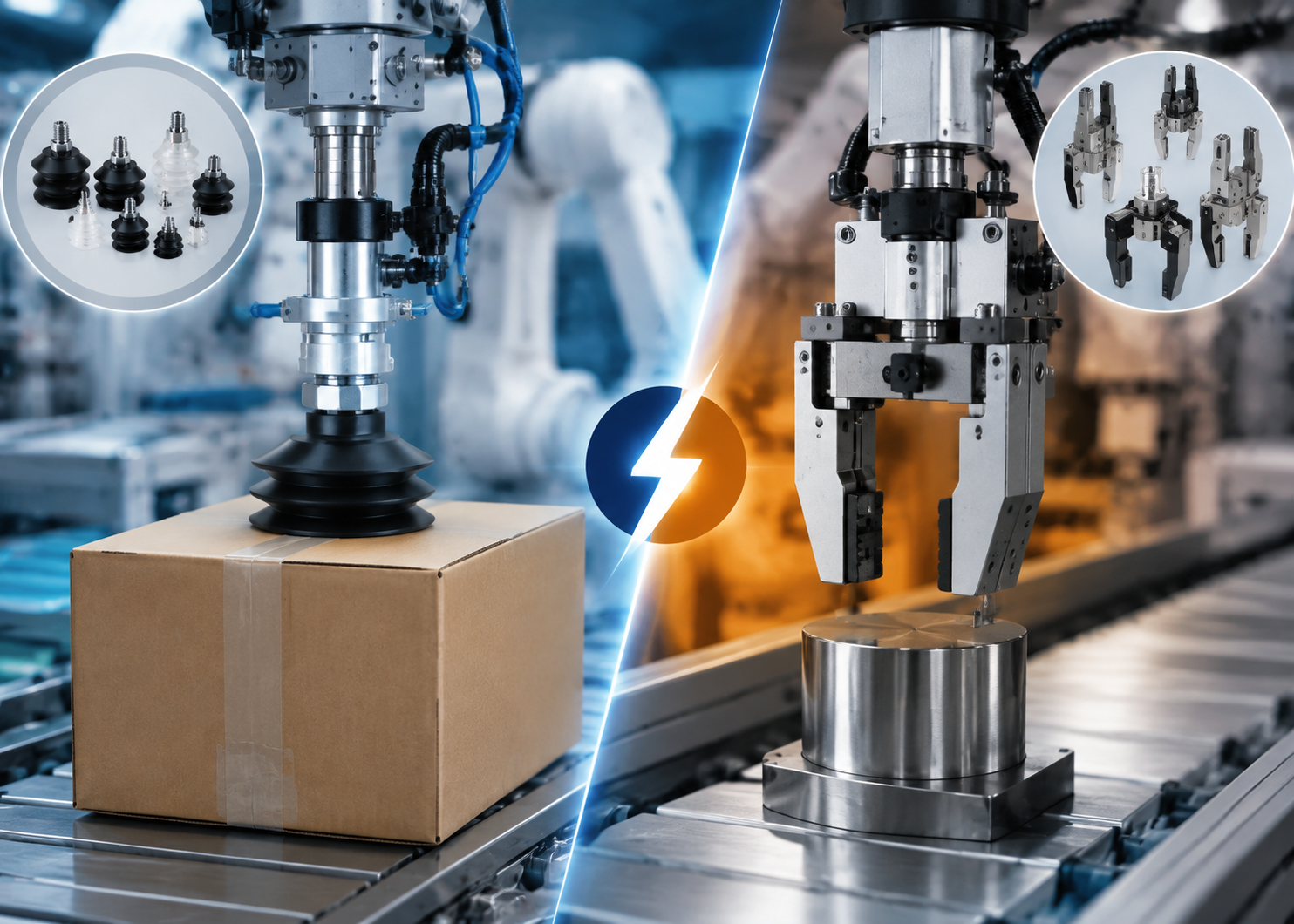
.jpg) Vacuum grippers use negative pressure generated by a vacuum source to securely hold objects through suction cups. They are commonly used for handling cardboard boxes, glass panels, metal sheets, plastic parts, packaging materials, and electronic components. Mechanical grippers, on the other hand, use fingers, jaws, or clamps to physically grasp and hold workpieces, making them suitable for irregular shapes and objects that cannot be picked up by suction.
Vacuum grippers use negative pressure generated by a vacuum source to securely hold objects through suction cups. They are commonly used for handling cardboard boxes, glass panels, metal sheets, plastic parts, packaging materials, and electronic components. Mechanical grippers, on the other hand, use fingers, jaws, or clamps to physically grasp and hold workpieces, making them suitable for irregular shapes and objects that cannot be picked up by suction.
Mechanical grippers provide strong and precise holding force by directly contacting the workpiece. They are often used in machining, assembly lines, automotive manufacturing, and applications where parts have complex geometries or uneven surfaces. Unlike vacuum solutions, mechanical grippers do not rely on surface sealing conditions, making them suitable for a wider range of shapes.
The best gripping solution is not always the strongest one. It is the technology that matches the workpiece characteristics, production speed, and automation requirements.
Industrial Automation Engineering
Vacuum Grippers vs Mechanical Grippers: Key Differences
Vacuum grippers and mechanical grippers have different working principles and application advantages. Understanding these differences helps manufacturers select the most efficient automation solution.
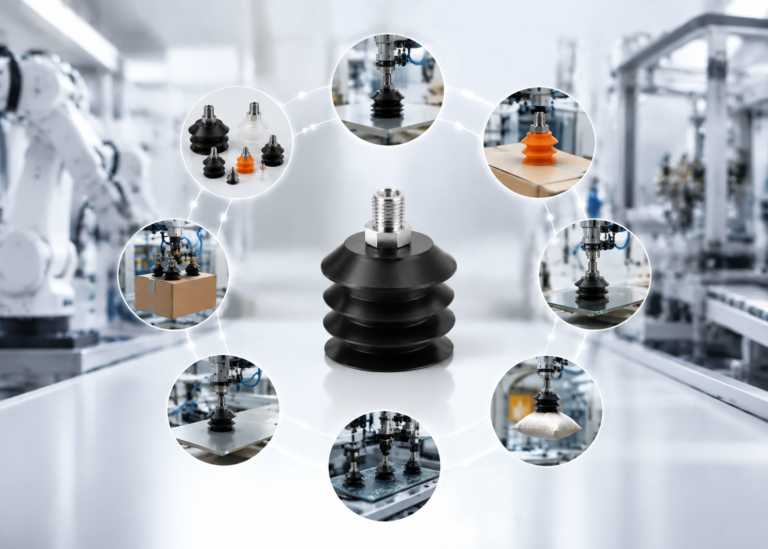
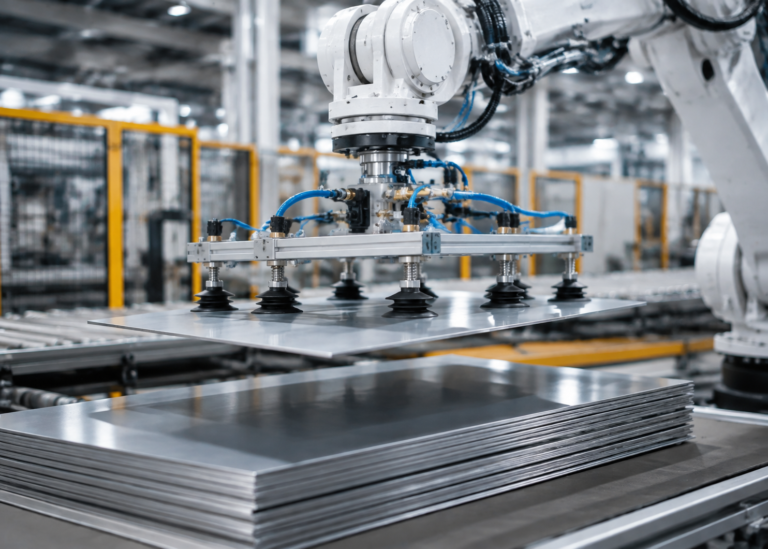
- Vacuum Grippers: Ideal for smooth, flat, and non-porous surfaces such as glass, cartons, metal plates, plastic sheets, and electronic products. They offer high-speed operation and simple maintenance.
- Mechanical Grippers: Suitable for irregular, heavy, or complex-shaped objects. They provide strong clamping force and reliable positioning during assembly and machining processes.
- Application Flexibility: Vacuum systems can be customized with different suction cups, while mechanical grippers can be designed with different fingers, jaws, and gripping mechanisms for specific products.
Vacuum grippers are usually preferred in industries requiring fast pick-and-place operations, such as logistics, packaging, food processing, and electronics manufacturing. They can handle multiple products quickly while minimizing surface damage.
Mechanical grippers are commonly selected for applications requiring precise positioning and strong holding force. They are especially useful when products have uneven surfaces, holes, complex structures, or cannot maintain an airtight seal.
How to Choose the Right Gripper for Automation?
Choosing the correct gripper depends on the specific production environment and workpiece requirements. Before making a decision, consider the following factors:
- Workpiece material and surface condition.
- Required gripping force and safety margin.
- Production speed and cycle time.
- Environmental conditions such as dust, temperature, and humidity.
- Maintenance requirements and operating costs.
For high-speed handling of boxes, panels, sheets, and smooth components, vacuum grippers are often the more efficient choice. For complex parts requiring precise positioning, mechanical grippers may provide better performance.
In many advanced automation systems, vacuum grippers and mechanical grippers are not competitors but complementary technologies. Some robotic systems combine both solutions to achieve maximum flexibility and reliability.
Conclusion
There is no universal answer to whether vacuum grippers or mechanical grippers are better. The ideal solution depends on the application, product characteristics, and automation goals. Vacuum grippers provide speed, flexibility, and gentle handling, while mechanical grippers deliver strong gripping force and adaptability for complex parts.
By analyzing your production requirements and selecting the appropriate gripping technology, you can achieve higher efficiency, lower operating costs, and more reliable automation performance.

There are many variations of passages of Lorem Ipsum available, but the majority have suffered alteration in some form, by injected humour, or randomised words which don’t look even slightly believable. If you are going to use a passage of Lorem Ipsum.ou need to be sure there isn’t anything embarrassing hidden in the middle of text. All the Lorem Ipsum generators on the Internet tend to repeat predefined chunks as necessary, making this the first true generator on the Internet.
Smartwatches have a digital screen which we can apply the various type of screens also we can apply our photos on the smartphone screen. An iOS Smartwatch is a wearable device in the form of a watch which is a combination of the watch, health monitor, and Mobile phone.